

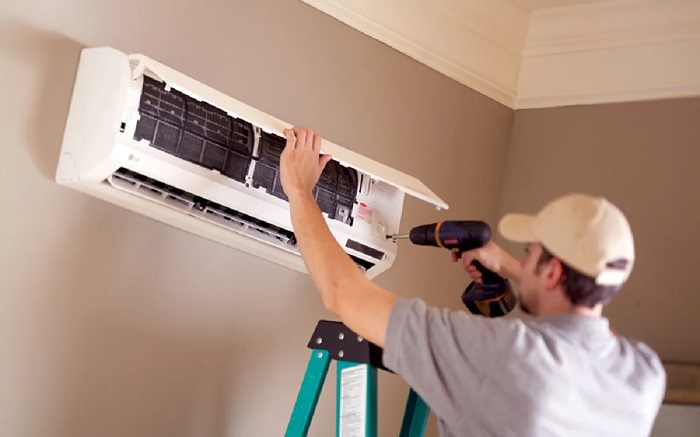
Installing an air conditioner in an apartment requires not only choosing the right model but also following the proper placement, mounting, and connection procedures. Proper installation affects cooling efficiency, noise levels, energy consumption, and the equipment’s service life.
Installation errors often lead to freon leaks, vibrations, condensation leaks, and conflicts with neighbors due to improper placement of the outdoor unit. Below are practical tips from AC installation service to help you prepare for and manage the installation process.
Is approval from the management company required, and how can I avoid fines when installing on a façade?
Installing an outdoor unit on the façade of an apartment building affects common property, so in most cases, approval from the management company (management company/homeowners’ association) and compliance with building maintenance regulations are required. Unauthorized installation may result in a removal order and fines.
To avoid conflicts and penalties, it is important to clarify local requirements (including regional landscaping regulations) in advance and obtain the necessary permits before starting work, especially if the building has a special status or a “sightseeing” façade.
How to obtain approval and avoid a fine
1) Check the status of the building and façade. If the building is a cultural heritage site, is located in a historic zone, or has restrictions on the façade, installation may require separate permission from an authorized body (in addition to the management company). In such cases, unauthorized installation most often results in mandatory removal.
2) Check the management company/homeowners association documents. Refer to the rules for the use of common property, general meeting resolutions, regulations for the placement of equipment on the façade (if adopted), as well as requirements for condensate drainage and noise levels.
3) Submit an application to the management company before installation. Typical requests include:
- owner’s statement;
- outdoor unit layout diagram (floor, side, connection to windows/balcony);
- description of mounting method and safety measures;
- condensate drainage solution (prohibiting dripping on the façade and passersby is a common requirement);
- model information (noise level), and sometimes a service warranty.
4) Consider the need for a general meeting resolution. If the building rules stipulate that any changes to the façade or wall mounting require owner approval, the management company may refer the matter to a general meeting. Without such a resolution, installation on the façade may be considered a violation of the rules for the use of common property.
5) Comply with key technical restrictions. To reduce the risk of complaints and inspections:
- Install the unit so that it does not disturb neighbors (noise/vibration), use vibration dampers;
- Avoid placing units on “prohibited” areas of the façade (front façades, areas above entrances, display windows, balconies, etc. – according to building/city regulations);
- Hire installers with permits and documentation, and keep the contract and certificate of completion.
6) Keep evidence of approval. Keep the written response from the management company/homeowners’ association, the minutes of the general meeting (if any), the project/diagram, and the contract with the installation company. This will help in case of neighbor complaints and inspections.
Bottom line: if the external unit is installed on the façade, it is safer and more appropriate to approve the placement in advance and install it in accordance with the requirements of the management company and local regulations. This reduces the risk of fines, regulations, and costs for rework or demolition.